




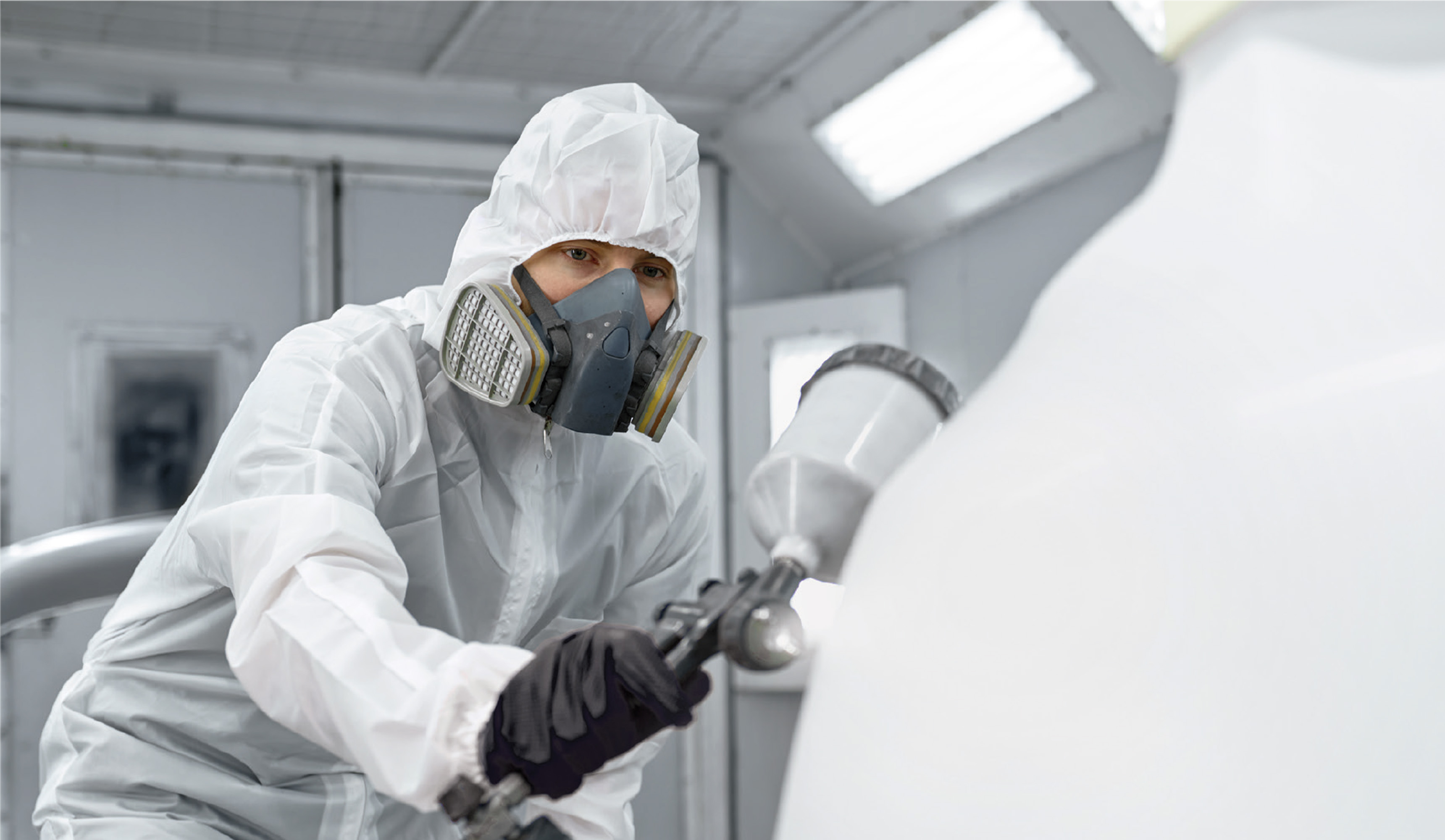
Climatic conditions during the application of coating materials have a direct impact on the quality and durability of the applied coating.
Which key parameters should be checked? How do individual parameters affect the painting process? What problems can result from failing to maintain proper conditions? You will find the answers to these questions in this article.
Among the first activities determining whether painting can begin should be the inspection of the surface condition and the temperature and humidity conditions. The conditions for carrying out painting operations are described in detail in the technical data sheets of individual coating materials. General principles and basic concepts related to climatic conditions were once defined in standards PN-71/H-97053 and PN-79/H-97070. Although they are still referenced, the most important standards governing painting conditions today are PN-EN ISO 12944, PN-EN ISO 8502-4, PN-EN ISO 8501 and PN-EN 23270. In painting and coating work, four basic concepts related to temperature and humidity conditions can be distinguished:
-
Dew point temperature: the temperature at which water droplets appear on a surface as a result of condensation of water vapor contained in humid air.
-
Ambient temperature: the air temperature at the location or in the room where the work is carried out.
-
Substrate temperature: the temperature of the surface intended for painting.
-
Relative humidity: in simple terms, the percentage ratio of the amount of water vapor present in the air to the maximum amount of water vapor that can be held in the air at the same temperature without condensation.
Each of the described parameters affects the painting process. The influence of relative humidity on application and drying conditions is variable. As a rule, relative humidity and temperatures (e.g., of the substrate, paint, or air) should be as specified in the technical data sheets. Excessive humidity negatively affects the drying process, while too low humidity results in poor coating quality. On clean metal surfaces, water vapor appears when relative humidity approaches 100%. In practice, the following cases regarding substrate temperature and dew point are distinguished:
-
the substrate temperature is more than 3°C higher than the dew point temperature – no condensation occurs
-
the substrate temperature is equal to the dew point temperature – condensation may occur, especially in poorly ventilated areas. Forced air movement helps reduce the risk. Painting such a surface may result in, for example, lack of adhesion
-
the substrate temperature is lower than the dew point temperature – condensation occurs on the surface. In this case, moisture-tolerant products should be used.
Ambient temperature significantly affects drying and film formation within a coating system. It is obvious that higher temperature means faster drying and curing. Curing is the process in which paint molecules chemically bond with the hardener, making the coating hard and resistant to damage and weather conditions. Low temperatures can cause problems with viscosity, application properties (sprayability), drying, film build, curing, strength, and protective properties. At low temperatures, paint viscosity increases significantly, which means it must be heavily thinned to achieve application properties. This usually leads to runs and low dry film thickness. Excessively high temperatures can also cause problems. At high temperature and intensive ventilation, solvents evaporate too quickly from the paint surface. The coating dries too fast, forming a surface “skin” that traps some of the solvents inside. Solvents trapped in the coating may cause cracking, blistering, and micro-craters (pinholes), reduced gloss, and insufficient curing.
Climatic conditions during painting operations are among the most important factors determining coating durability. Therefore, it is recommended to perform measurements before starting work, during application, and after completion. A wide range of measuring instruments is available to determine actual humidity, temperature, and dew point of the environment or a specific surface. Modern electronic meters allow quick and accurate determination of these values at the press of a button. Therefore, it is worth equipping yourself with such a device to avoid problems later on.